The Art of the Perfect Cookie
The Art of the Perfect Cookie
What makes a cookie truly good?
Is it the first bite, the aroma that reaches you before you taste it, or the way its texture changes as you chew?
There is no single definition of the perfect cookie. Some people prefer soft, delicate cookies, while others enjoy a firmer texture or a more pronounced bite.
Yet behind every well-made cookie is something more important than personal preference: a carefully balanced recipe.
Ingredients, proportions, and baking conditions all influence the final result. Understanding these details reveals why even a simple cookie can require considerable skill to make.
A Great Cookie Begins With Balance
A cookie recipe is more than a list of ingredients. Every component affects the others.
Flour provides structure. Sugar contributes sweetness and influences moisture, spreading, and browning. Eggs or egg whites help bind ingredients and create structure as their proteins set during baking.
Fats influence tenderness and how a cookie feels in the mouth.
But the way these ingredients interact matters just as much as their individual properties.
Too much liquid can change how dough holds its shape. Too little moisture may produce an excessively dry texture. Adjusting the sugar can affect both appearance and structure.
This is why successful baking depends on precision.
The goal is not to use more ingredients, but to understand what each one contributes.

Why Texture Matters as Much as Flavor
Think about the difference between a delicate almond cookie and a dense chocolate cookie.
Both can be delicious, but the experience of eating them is completely different.
Texture affects how we perceive food from the first bite.
It depends on the type of flour, moisture content, sugar concentration, mixing method, and baking conditions.
Some cookies develop a tender interior, while others are intentionally firm or crumbly.
Neither is automatically better.
What matters is whether the texture matches the style of cookie being made.
An almond-based cookie should not be judged by exactly the same standards as a traditional wheat-flour chocolate chip cookie.
Their ingredients behave differently, and their ideal textures may be different too.
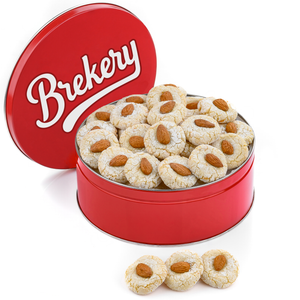
Discover how carefully balanced ingredients come together in our handmade Brekery Almond Cookies.
Sugar Does More Than Add Sweetness
Sugar plays several important roles in baking.
It influences moisture, spreading, and the development of color and flavor.
Different types of sugar can produce different results because their composition and physical properties vary.
During baking, caramelization and reactions between sugars and amino compounds can create additional aromas and flavors.
These processes help explain why baked cookies smell more complex than their unbaked ingredients.
However, adding more sugar doesn't automatically produce a better cookie.
The right amount depends on the recipe, the desired texture, and the balance of other ingredients.
What Makes Almond Flour Different
Almond flour behaves differently from conventional wheat flour.
Wheat contains proteins that can form gluten when hydrated and mixed. Almond flour does not contain those gluten-forming proteins.
Instead, it consists of finely ground almonds containing natural oils, protein, and fiber.
These characteristics can contribute to a tender texture and a distinctive almond flavor.
The size of the ground particles also matters.
Finely ground almond flour generally creates a more uniform mixture, while coarser almond meal can produce a more noticeable texture.
Almond flour cannot always replace wheat flour in equal amounts because the two ingredients absorb liquids and contribute structure differently.
For almond cookies, balancing the flour, sweetener, and binding ingredients is particularly important.

Flavor Is More Than Taste
Much of what we experience as flavor is connected to aroma.
Our sense of smell helps us identify the complex characteristics of food, which is why a cookie may seem less flavorful when our sense of smell is temporarily reduced.
During baking, heat can create new aromatic compounds through chemical reactions involving the ingredients.
Almonds have a distinctive flavor that can be complemented by other ingredients.
Orange zest is a good example.
Its outer colored layer contains aromatic oils, including limonene, which contributes to its recognizable citrus scent.
When used thoughtfully, orange zest introduces a fresh contrast to the deeper flavor of almonds.
This shows how even a small amount of an ingredient can influence the overall experience.
At Brekery, we appreciate how thoughtfully chosen ingredients can create a distinctive flavor without unnecessary complexity.
Why Baking Time Changes Everything
Two cookies made from the same dough can turn out differently when baked under different conditions.
Temperature and baking time influence moisture loss, protein setting, browning, and structure.
As heat moves into the dough, ingredients undergo physical and chemical changes.
Proteins set, moisture evaporates, and the cookie gradually develops its finished texture.
Meanwhile, the surface may develop additional color and aroma.
Even a few extra minutes can make a noticeable difference, particularly with smaller cookies.
Oven accuracy, baking-sheet material, and cookie size also affect the result.
Good baking therefore requires observation as well as measurement.
Perfect Doesn't Mean Identical
Commercial food photography often presents cookies as perfectly round and almost identical.
But appearance alone doesn't determine quality.
Handmade cookies may show natural differences in shape, surface texture, or the placement of individual ingredients.
These variations are not automatically signs of a problem.
What matters is whether the cookies are properly prepared, consistently baked, and enjoyable to eat.
Of course, excessive spreading, uneven baking, or an unpleasantly dry texture can indicate mistakes.
The important distinction is between natural variation and poor execution.
A thoughtfully made cookie can have an irregular appearance while delivering exactly the flavor and texture its recipe was designed to achieve.
The Beauty of Simple Ingredients
A complicated recipe is not necessarily a better recipe.
Some cookies rely on numerous fillings and additions. Others use just a few carefully selected ingredients.
With fewer ingredients, each one becomes more noticeable.
At Brekery, our handmade Almond Cookies are made with five ingredients: almond flour, almonds, egg white, cane sugar, and orange zest.
Almond flour provides the foundation, while whole almonds contribute their recognizable character.
Egg white helps bind the ingredients and contributes to structure.
Cane sugar provides sweetness and influences the baking process.
Orange zest adds a fresh citrus aroma that complements the almonds.
The recipe reflects a simple idea: a cookie doesn't need a long ingredient list to have a distinctive taste.

What Makes a Cookie Worth Remembering
The perfect cookie is not necessarily the largest, sweetest, or most elaborate one.
It is a cookie in which the ingredients, flavor, aroma, and texture work together.
The sweetness should complement the other flavors. The texture should suit the type of cookie. The aroma should make the experience more enjoyable.
This is what makes baking both a science and a craft.
Science explains how ingredients behave and why temperatures matter.
Craft comes from knowing how to apply that understanding to create something people genuinely enjoy.
There may never be one universally perfect cookie.
But there is something special about a cookie made with care, a balanced recipe, and a clear understanding of what makes it delicious.
Discover the combination of almonds, natural ingredients, and careful craftsmanship in our Brekery Almond Cookies.
Explore more stories about baking, ingredients, and everyday moments at Brekery.